
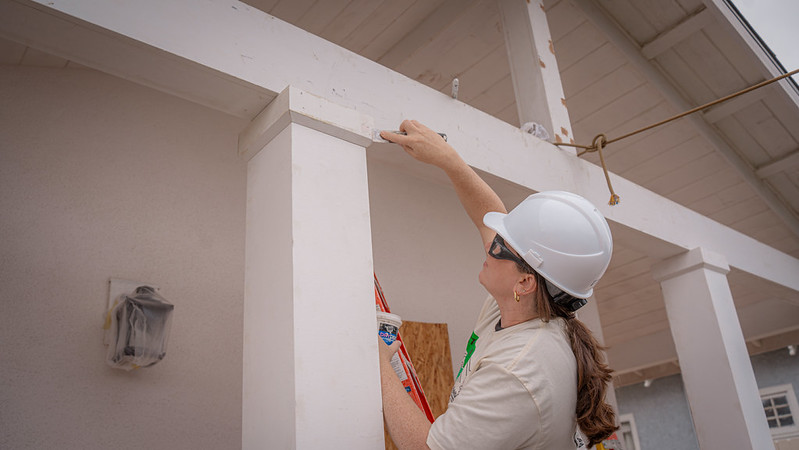
The traditional path to homeownership — buying an affordable starter home, building equity, and trading up to a forever home — is shifting.
A 2025 National Association of REALTORS® (NAR) report found that the median age of a first-time buyer was 40 — the highest age on record. This reflects what NAR deputy chief economist and vice president of research Jessica Lautz describes as the “real-world consequences of a housing market starved for affordable inventory.”
High mortgage rates and home prices are also prompting existing homeowners to stay put. According to a new Redfin survey, 65% of homeowners chose to renovate their home instead of buying a new one.
Adapting a first or current home into a “forever home” can be a practical move, especially in high-cost housing markets like Los Angeles.
Why Some Are Choosing “Forever” in L.A.’s Housing Market
For homeowners who already have a foothold in Los Angeles, moving isn’t always the next step when they’ve outgrown their homes. The high cost of moving can make staying in place more appealing.
“Trading up” means facing today’s expensive housing market
Longtime homeowners who’ve built equity may still face financial challenges when upgrading to a new home.
A homeowner who sells a $900,000 home with a remaining $500,000 mortgage has $400,000 in equity, or about $346,000 after deducting 6% in selling costs. Buying a slightly larger $1.05 million L.A. home would require a mortgage loan roughly $204,000 higher than their previous loan at today’s 7.28% 30-year rate, plus tens of thousands of dollars in buyer closing costs.
Seller and buyer fees that chip away at years of equity, along with high home prices and elevated financing costs, can create barriers for a family navigating a new season of life.
Renovating can turn the home you have into the home you need
Homeowners are finding ways to make the homes they have today better suited to their needs tomorrow.
Types of updates that help homes adapt to families’ evolving needs include:
- Additions. These upgrades provide an extra bedroom, bathroom, or other functional space for growing families. Angi.com estimates that a bedroom addition in Los Angeles costs $56,800 on average and can increase home value by 10% to 15%.
- Finished basement or garage. This can provide a useful multipurpose space for a home office, gym, or playroom for young children.
- Accessory dwelling unit (ADU). An ADU can support multigenerational households by serving as an in-law suite for grandparents, a guesthouse, or it can generate rental income.
- Open-concept layout. Removing non-load-bearing walls between the living area and kitchen lets parents supervise young children while cooking, or converse with guests across rooms.
- Accessibility. These updates support aging in place, allowing homeowners with limited mobility to move through their homes comfortably and safely.
The Redfin report found that among homeowners planning a 2027 renovation, 71% said they’re choosing to transform their current home, instead of moving.
The Value of Staying Goes Beyond Finances
The value of a forever home, however, isn’t measured only in dollars. Staying in the same home over time can give families something priceless: continuity.
It’s the backdrop for childhoods memories and family milestones, a comforting space to exhale after a long day, and a place to build community.
Children get consistency
Children can remain in a school, neighborhood, and peer network they’re already familiar with. This stability can mean less stress, and positive academic and social development.
Relationships deepen
Living in the same home for years can help build connections with neighbors. Having neighbors who can lend a hand, watch for a package, recommend a trusted contractor, or simply notice when something is wrong is invaluable.
Over time, those everyday exchanges can build deeper relationships and a stronger sense of belonging within a community.
Communities thrive
Adapting a home to a family’s changing needs can allow the people and places woven into their lives — nearby grandparents, a trusted child-care provider, a place of worship, a favorite park for watching fireworks, or a local business that knows the family by name — to remain part of their lives, too.
Research by Habitat for Humanity has found that residential stability can encourage greater social and civic engagement, creating stronger connections between homeowners, their neighbors, and the community they share.
Building and Preserving a Forever Home
Whether a family has owned its home for decades or is just beginning their homeownership journey, the goal remains the same: having a safe, stable place to flourish.
For some Angelenos, that means making the home they have work for their next chapter in life. For others, it’s having the opportunity to own a first home they can grow into and make their own.
Habitat for Humanity of Greater Los Angeles helps families do both:
- Home Preservation Program. Qualified homeowners receive assistance with critical property updates so they can remain safe in their homes. Learn more about our Home Preservation Program.
- Homeownership Program. First-time homebuyers can access affordable housing opportunities in communities across greater Los Angeles, including low-cost financing, homeownership education, and support. Fill out our homeownership pre-eligibility questionnaire to see if you’re eligible.