
Key points
- Approximately 75% of Palisades survivors are still displaced nearly 18 months after the fires.
- The cost of rebuilding a home has changed over the decades, creating a significant financial gap for survivors. Insurance, permitting, design, and financing also shape the total cost of returning home.
- Time is also a cost. Months and years spent navigating recovery, extended temporary housing, additional living expenses, and uncertainty — can take a toll.
- Rebuilding takes community. The collective support of sponsors and donors, volunteers and relief programs — like Habitat LA’s ReBUILD LA® — is what makes long-term recovery possible.
Although a disaster can quickly impact families and destabilize communities, rebuilding can be a prolonged and financially unpredictable process.
The latest Department of Angels LA Fire Recovery Report revealed about 3 in 4 Pacific Palisades survivors remain displaced 18 months after the January 2025 fires.
Many residents face significant barriers to rebuilding on their own. What they paid for their homes decades ago is just a fraction of today’s home prices. Rebuilding also isn’t as straightforward as recreating the original house, especially given today’s higher construction costs.
Here’s a closer look at some of the factors contributing to this financial gap.
Then: A Look Back at Los Angeles Home Prices
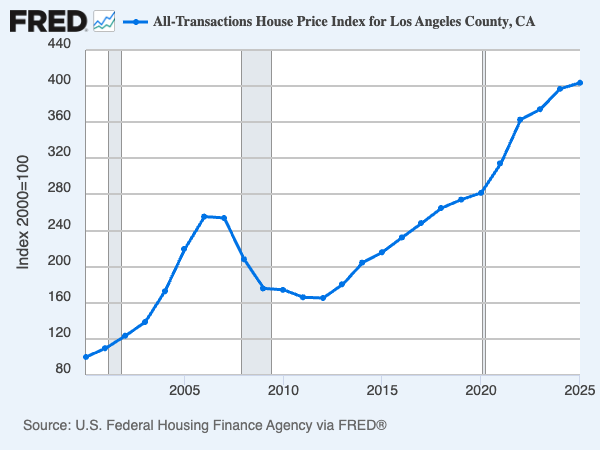
The Los Angeles housing market was vastly different for homeowners who purchased their home years or decades ago. In 2025, LA County’s home price index was roughly four times higher than it was in 2000, according to Federal Reserve Economic Data (FRED).
Zillow estimates that affected homes within the 2025 wildfire zones, including Pacific Palisades and Malibu, had a median home value of $1.95 million before the disaster. Although homeowners who’ve owned their property for many years may have built equity over time, it might cover only a portion of the cost of buying or rebuilding a comparable home.
Now: What It Costs to Rebuild Today
Like home values, construction costs have increased over the years. FRED’s construction materials producer price index (PPI) is just one variable contributing to this upward trend. The construction materials PPI in August 2026 more than doubled since January 2000.
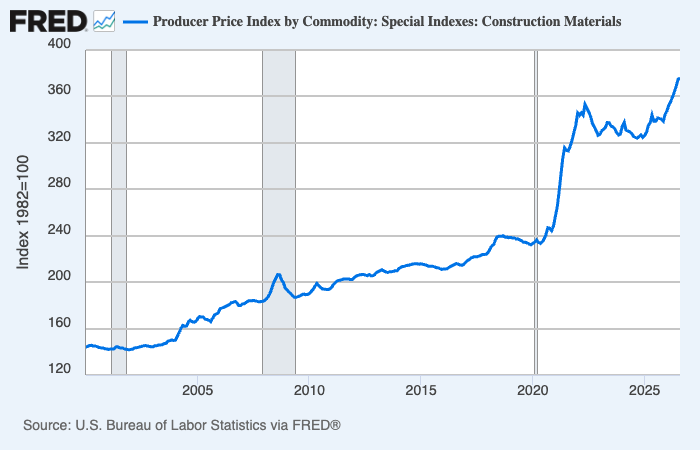
Construction materials are only part of the rebuilding equation. Labor, debris clearing, permitting, design, site preparation, and other project requirements add to total construction costs.
For some wildfire survivors, this financial undertaking can make returning home considerably harder.
Why Rebuilding After Disaster Brings Added Challenges
Rebuilding a home after a disaster isn’t the same as building a home from scratch under ordinary circumstances. Survivors are often rebuilding while navigating displacement, insurance claims, unfamiliar processes, and unexpected hurdles.
1. The scale of recovery
The 2025 wildfires burned through more than 23,000 acres and destroyed 6,845 structures in Malibu and Pacific Palisades. The disaster created a tremendous and simultaneous demand for construction resources in these communities, putting additional pressure on already high construction costs.
2. Modern requirements
Impacted homes built decades ago may not meet today’s building codes and safety standards. Rebuilding today might require ignition-resistant materials, as well as seismic and framing upgrades.
Related: How to Prepare Ahead of the Next Disaster: 5 Disaster Preparedness Tips
These safety requirements can lead to unexpected upgrades or alterations to the original home, adding complexity and cost to the project.
3. Significant insurance gaps
Insurance is critical in helping homeowners recover after disaster by providing funds to repair or replace damaged property. But coverage and insurance proceeds don’t always meet the full cost of construction.
For some survivors, this insurance gap only becomes apparent after the rebuilding process begins.
Martha Quintana-Phoenix, ReBUILD LA® Navigation Manager, helps wildfire survivors navigate their rebuilding journey so they can return home. Recently, she saw the impact of underinsurance firsthand while working with one survivor:
“When I assessed her situation, I saw she was severely underinsured, and at [the] time, she had no sense of how much [rebuilding] was really going to cost,” says Martha. “Once those numbers became apparent, she was very concerned and very afraid… what her insurance was giving her [compared] to what she needed was not going to be even close to what she needed to rebuild.”
Generally, homeowners in Pacific Palisades or Malibu face rebuilding gaps exceeding $1 million.
4. Process delays can magnify existing disadvantages
Each phase of rebuilding might have a targeted timeline, but bottlenecks throughout the process can extend overall recovery. From substantial debris removal to permitting backlogs, delays can increase costs while prolonging financial and housing instability.
For survivors with limited financial resources — including those with low or fixed incomes, renters, and seniors — time can become another barrier to recovery. The longer rebuilding takes, the longer they may have to absorb extra costs, navigate short-term housing, and wait to return home.
ReBUILD LA® is Helping Close the Gap
Rebuilding after a disaster involves more than repairing a house. ReBUILD LA® is Habitat LA’s long-term disaster relief program serving income-qualified survivors facing significant financial or other barriers to rebuilding.
For some survivors, those obstacles arise before construction even begins. Upfront costs and complex rebuilding processes can make getting started feel overwhelming.
ReBUILD LA bridges the gap with financial assistance and personalized support. Martha recalled that same survivor’s experience:
“She had some barriers to overcome before she could even start planning to go home. This is where Habitat offered her the Accelerator Fund, so she was able to take advantage of the $10,000 Accelerator grant to pay some upfront fees,” she says, adding that they also qualified for a 0% gap loan with no payment due until after the first 30 years.”
In addition to grants and financing, ReBUILD LA® offers tailored disaster relief services, including reconstruction, repairs, and smoke and water damage remediation.
Together, these resources help survivors overcome barriers to rebuilding — and move one step closer to home.
Help Build a Path Home for Disaster Survivors
Rebuilding can’t rest on individual homeowners alone. It requires resources, expertise, and a collective effort to make a meaningful impact.
- Policymakers can help create conditions that make rebuilding more feasible.
- Donors can help close funding gaps.
- Sponsors and partners can contribute expertise, materials, and other resources.
- Volunteers give their time to help families build forward.
It takes a village to rebuild a community. Support disaster recovery through ReBUILD LA®.